The Vintage Aviator
Constructors Of Military Aircraft
Latest News
Projects
Albatros DVa
Build Gallery
Covering The Albatros DVa
FE.2b
Flying the FE.2b
Flight Video
Build Gallery
Fokker DVII
Build Story
The "Blue Max"
SE.5a Reproduction
Flying the SE.5a
SE.5a History
SE.5a Walkaround
SE.5a Gallery
Re.8 Reproduction
RE.8 On Display
RE.8 Gallery
RE.8 History
BE.2 Aircraft
Be.2 History
BE.2c (Early Type) build gallery
BE2f Restoration
BE2c Reproduction
BE.2f Reproduction
Bristol F2B
Walkaround
F2B History
RAF.1a Engine
RAF.1a Gallery
RAF.1a History
Beardmore Engine
Beardmore Engine History
Beardmore Engine Movie
Beardmore Gallery
Mercedes Engine
Mercedes Engine History
Gallery
Oberursel Engine
Oberursel Engine Movie
Oberursel Gallery
Sopwith Triplane
Sopwith Triplane History
Walkaround Gallery
Sopwith Triplane Gallery
Aircraft Guns
Early Spandau Gun
The Parabellum Gun
The Us Savage Gun
The Spandau LMG 08/15
The Lewis Gun
The Schwarzlose Gun
The Vickers Gun
The Foster Mount
Aircraft Gun Gallery
Reference
Covering with linen
German Translations
White Metal Bearings
Irish Linen
Cable Splicing
Airshows
TVAL Airshows
ANZAC Day Airshow
Remembrance Day 2008
Remembrance Day 2009
Classic Fighters
2007
2005
2003
2001
Mid-air Drama
Warbirds Over Wanaka
2008
2006
2004
Wings over Wairarapa
2007
2005
Other Appearances
Ferry Flights
Hood Aerodrome 2007
1914-18 Photographs
Album I
Album II
Album III
Relics
Uniforms
1914-18 Posters
Posters - Album I
Motion Pictures
Models
About Us
The Vintage Aviator Ltd
Terms and Conditions
Site map
Links
Contact
Fe.2b
FE.2b Build Gallery
Home
|
Projects
|
Fe.2b
| FE.2b Build Gallery »
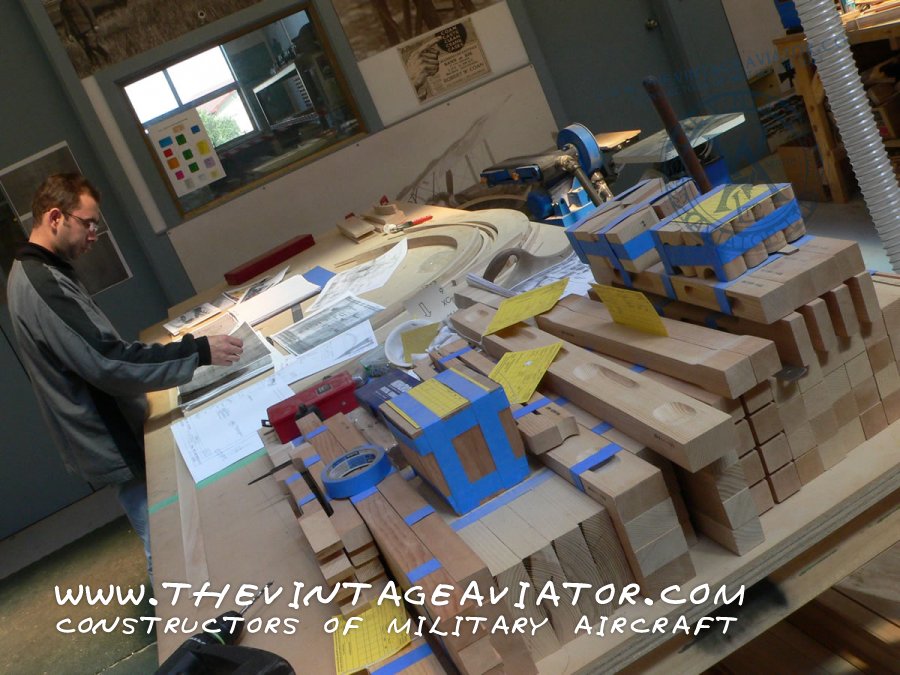
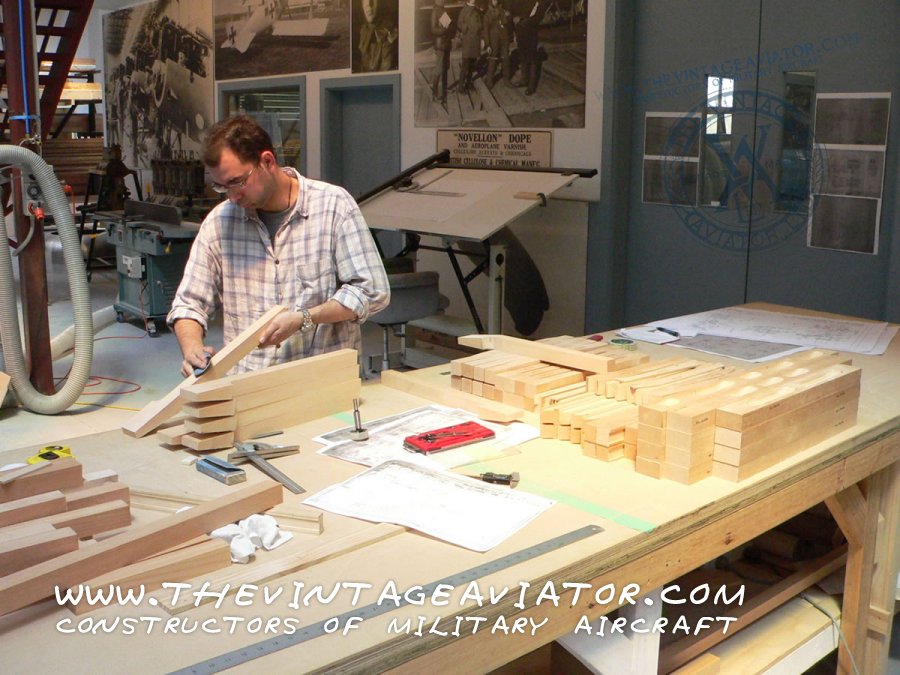
Warren Rangi works from original RAF drawings to create the wooden parts for the FE.2b nacelle.
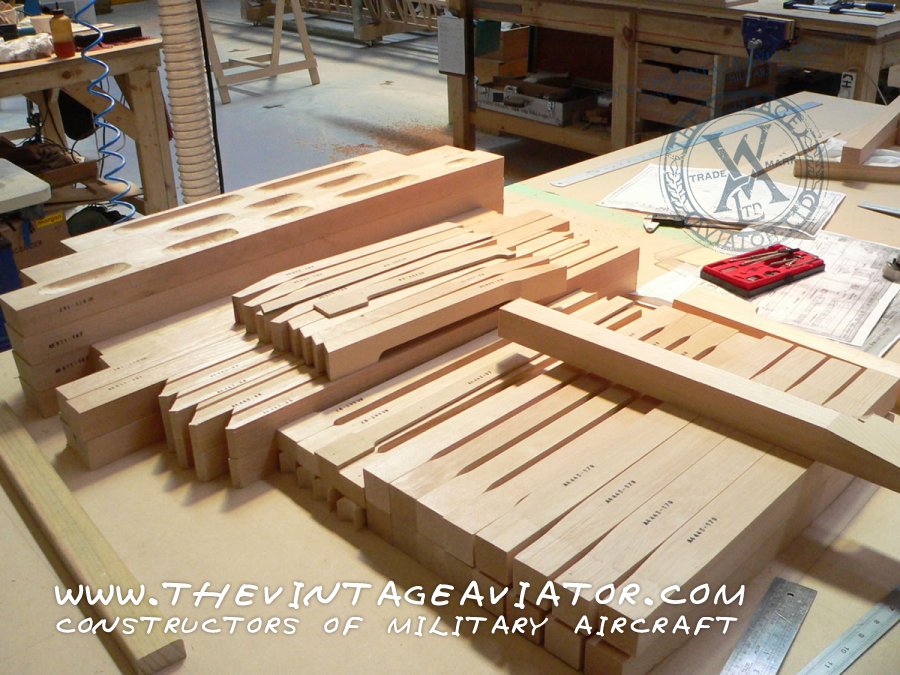
The wooden components all undergo inspection and dimensional checks prior to assembly into a complete nacelle
Nacelle crossmenbers and vertical struts ready for inspection.
Warren Rangi finishing up components for the nacelles, each part constructed from original RAF drawings.
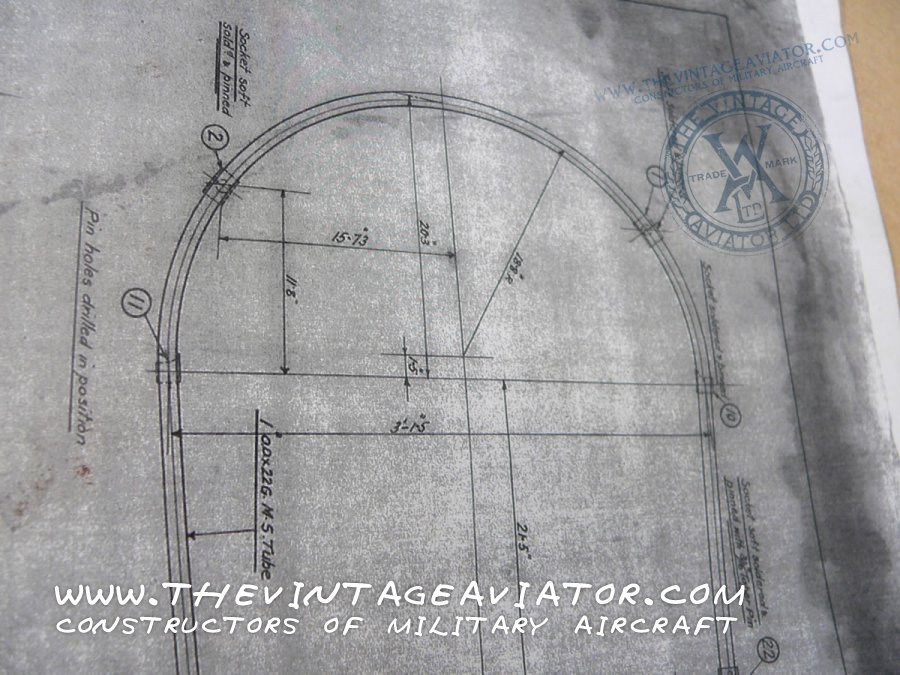
Bending template for forming steel tubes at the front of the nacelle. Note original drawing.
One of the many original drawings used to recreate this extinct aircraft
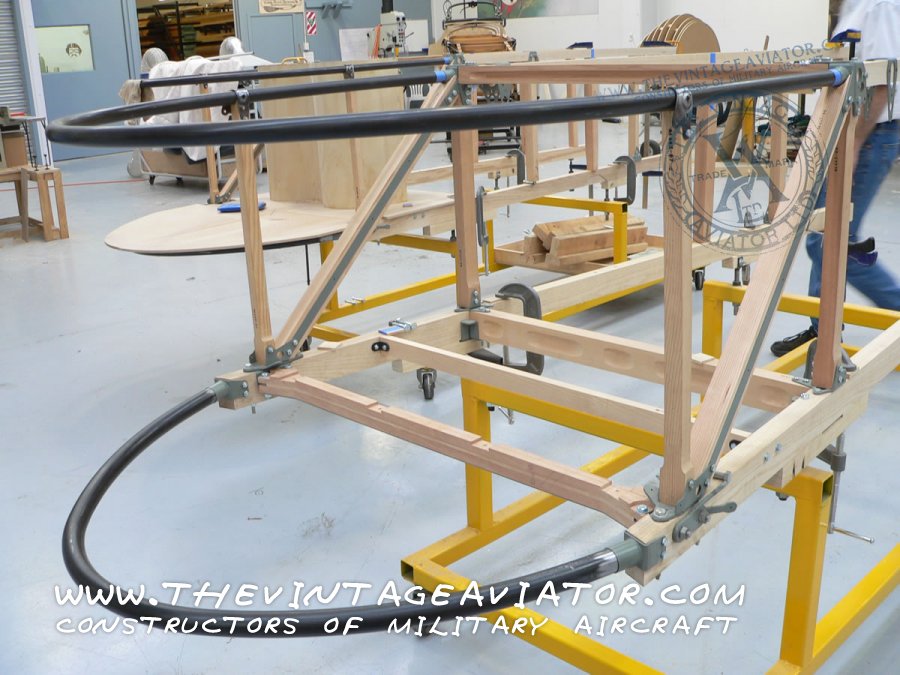
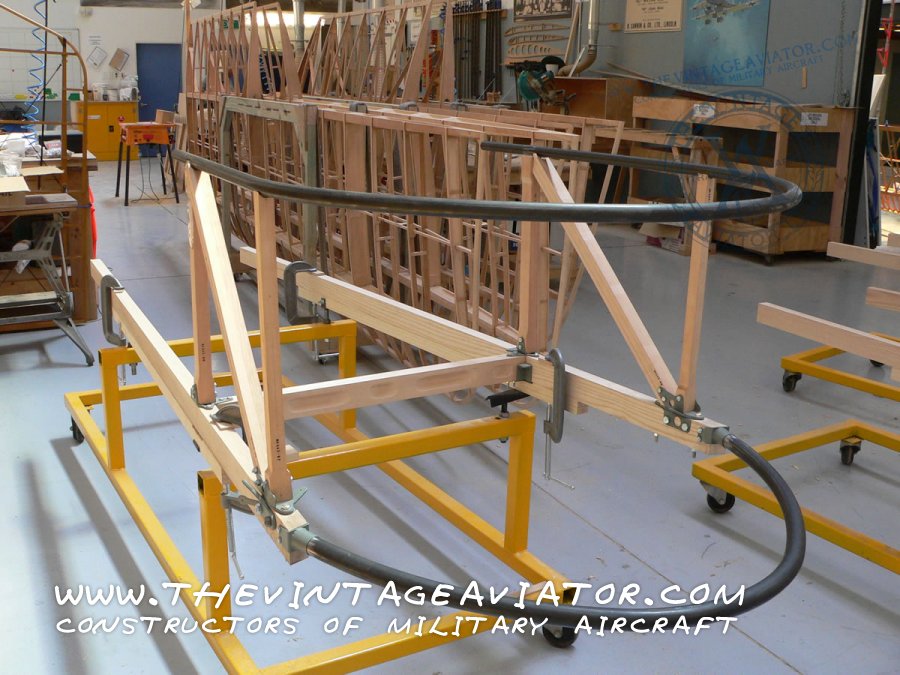
Two Fee nacelles starting to take shape in the workshop,
The very fist components come together, attached to a trolley to make movement throughout the workshop easier, the nacelle will weigh over 1,200 lbs w
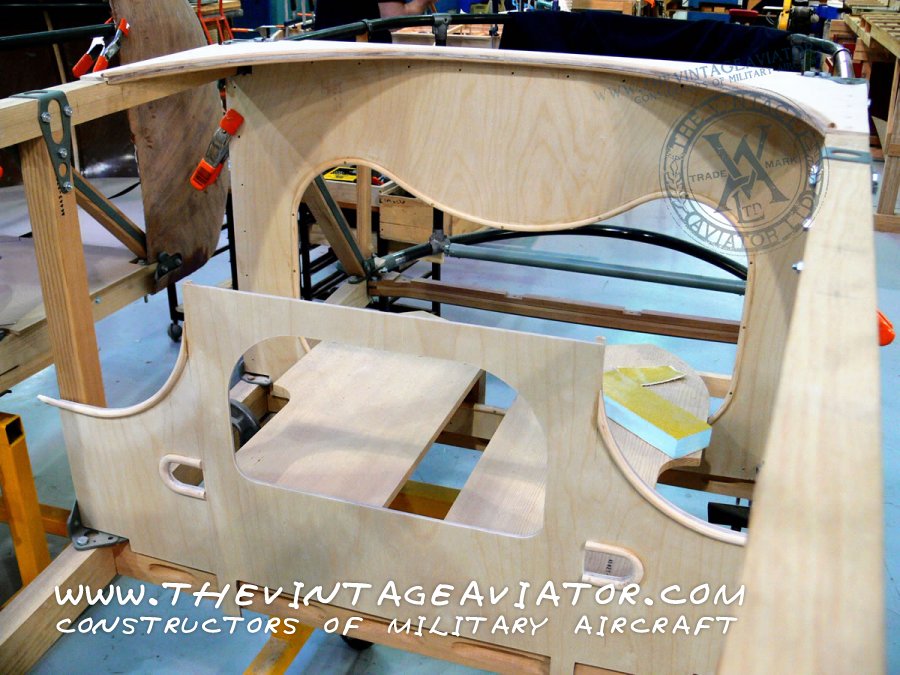
Looking more like fine cabinetry than an airplane, these bulkheads form part of the pilots cockpit, the arches allow room for the pilot to operate the
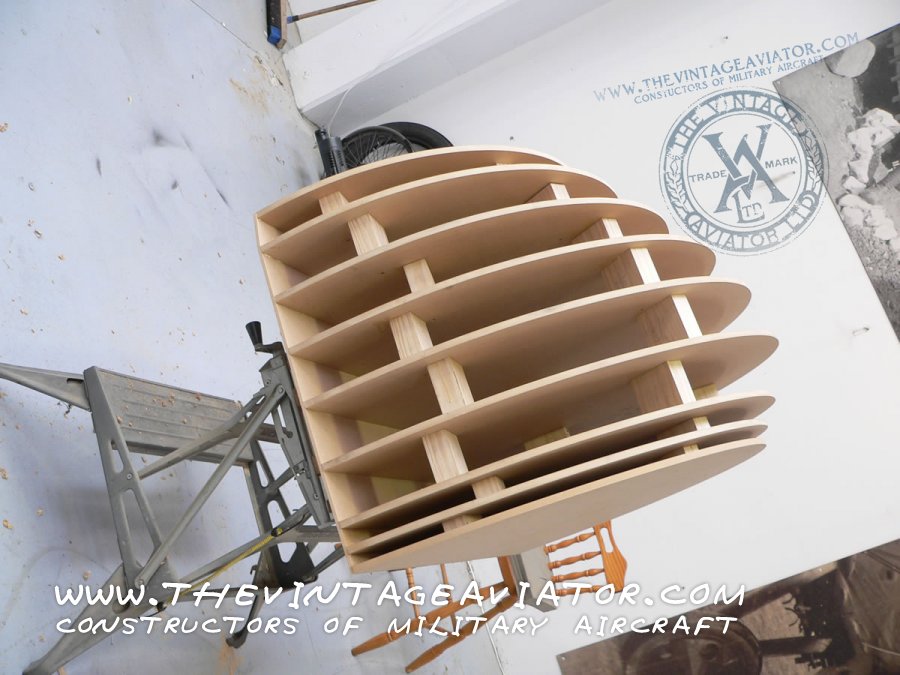
Form tool for laminating the thin mahogany veneer for the nose of the Fee.
Wil Finch adds the finishing touches to the former used to create the laminated nose of the Fee.
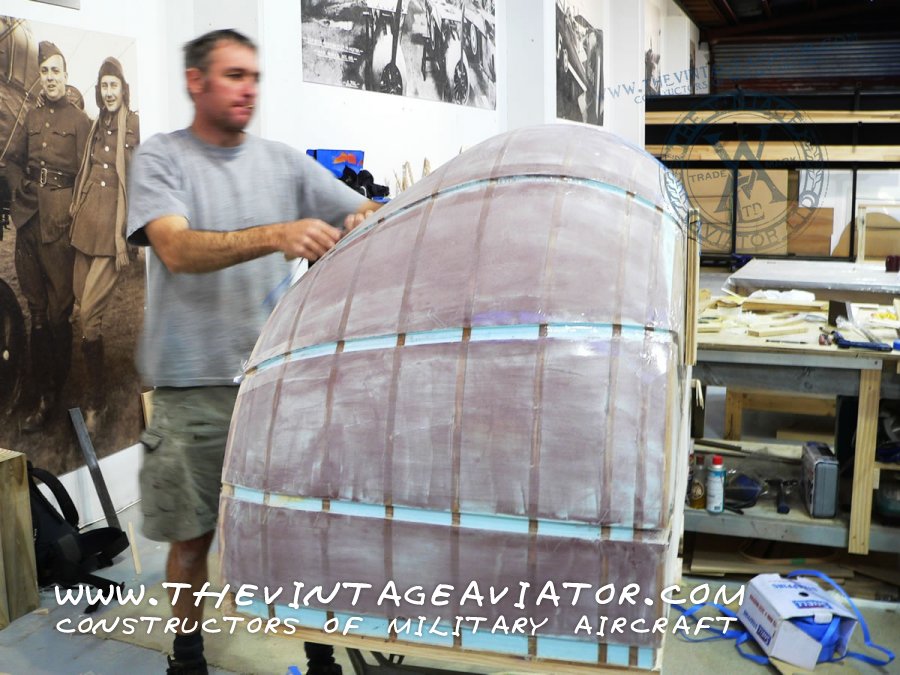
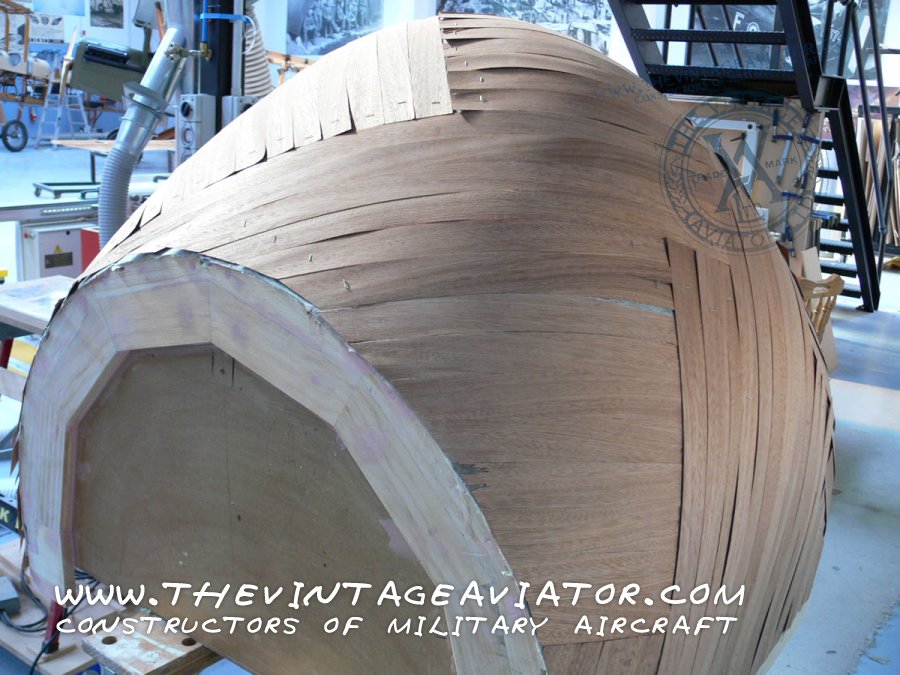
Two layers of 0.6mm veneer are cut and trimmed to lay flat along the former prior to gluing.
Nearly 140 individual strips make up each layer, these strips must be removed and replaced in the exact location prior to gluing
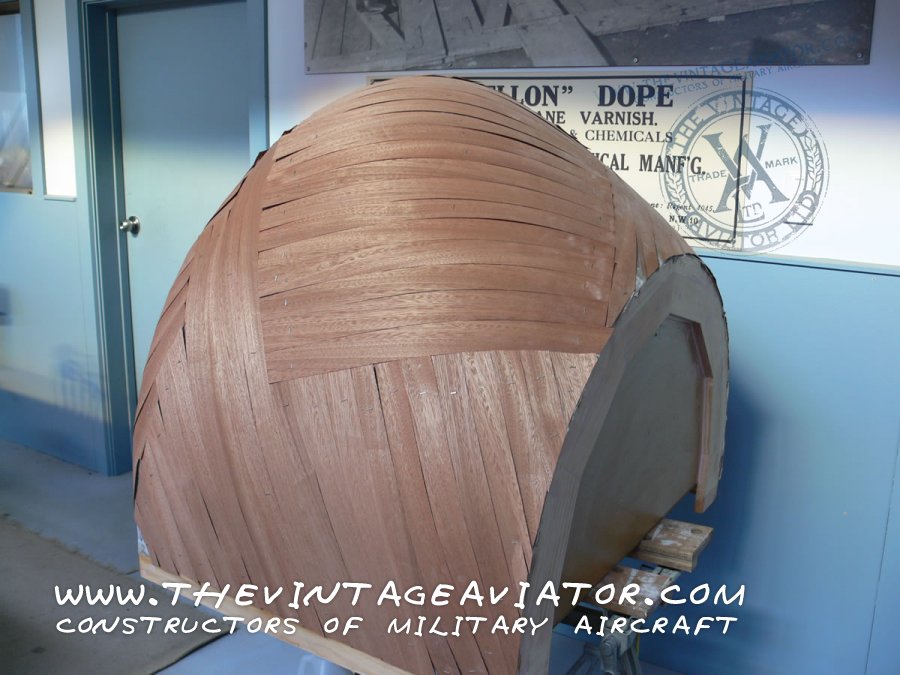
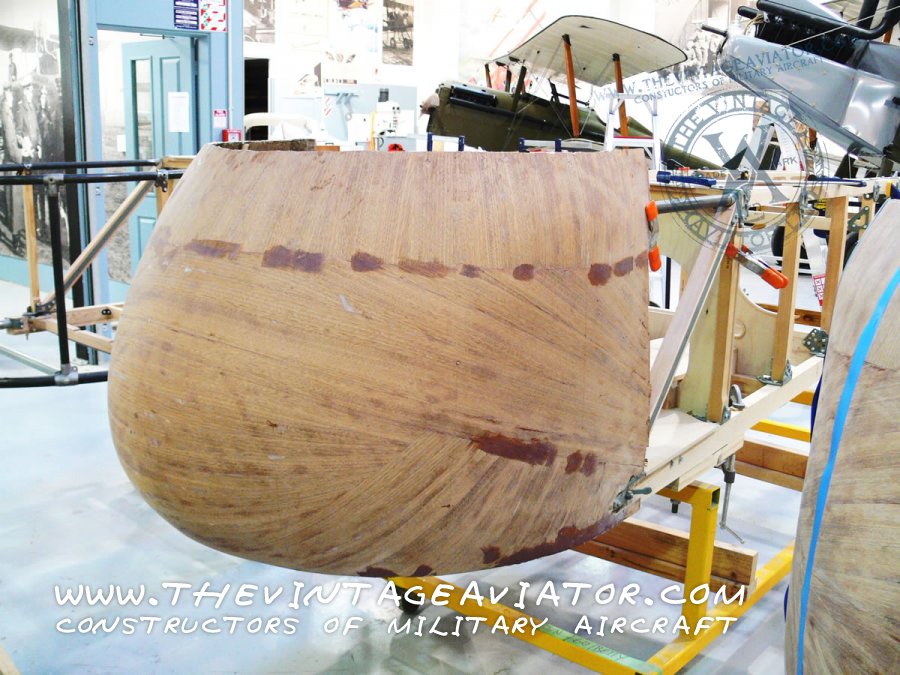
The composite nose of the Fee, two layers of veneer and one layer of linen cloth on the inside.
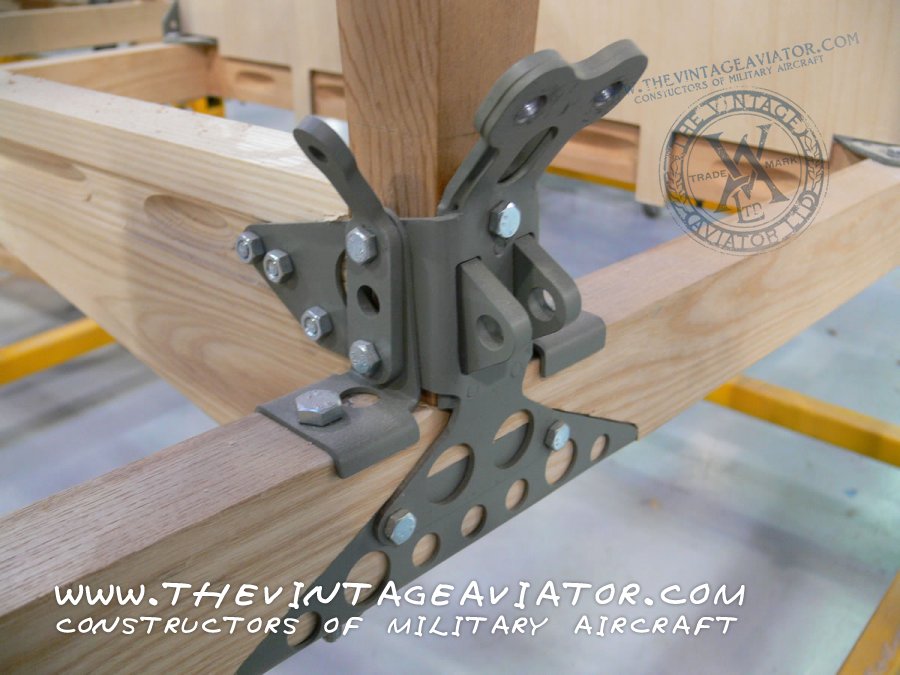
some of the complex bracketry formed by layers of steel and machined fittings that must "nest" together perfectly to fit.
Warren Rangi checking the fit of a number of bracketson the nose of the nacelle prior to installing permanently with proper AGS hardware.
With our CNC router we can easily cut the large number of wing rib webs form a sheet of aircraft grade plywood
The accuracy of the CNC router is clearly visible here, with like rib webs stacked for inspection prior to assembly
Nearly complete nacelle, the engine, radiator and oil tank sit atop ash engine bearers at the rear.
Lightweight nose fitted and formed plywood cockpit section in place the Fee takes shape.
Nacelle and lower centre sections ready to trial fit lower wings, Chris Higson checks wing bracing.
We are fortunate to have a selection of airworthy original struts to choose from!
Original struts after inspection and refurbishment, ready for installation.
The original struts were in such great condition even the A.I.D. inspection stamps and dates were visible!
Some of our struts were made by Boulton & Paul Ltd over ninety years ago, more fabulous detail to incorporate into our aircraft.
The Fee grows to nearly 50 foot span as the upper wings and centre sections are fitted, temporary struts have been used here.
With wings in place and rigged in the proper position measurements are taken for the many RAF wires that need to be made.
Close up of the Fee lower centre sections and the aft end of the nacelle, note the metal trailing edges and the wire bracing.
On the bed of our CNC router each half of a single outrigger has been hollowed out to reduce weight.
Detail of each outrigger, the routed halves are joined with a plywood spline and then packers are added to give the ends a round section.
The ends of each outrigger are fitted with metal sockets for attaching to the airframe. here the plywood splines are clearly visible
Two sets of spruce outriggers, nearly 23 feet long and bound with linen cord are ready for fitting.
Detail of the linen cord that binds the outriggers to prevent splitting.
Even original type AGS hardware is used throughout the construction. Here bolts are checked for length.
The aft two vertical struts on the outriggers are trial fitted before RAF streamlined wires are in place.
Detail of the outrigger vertical strut attachment, the eyebolt at the base is "keyed" into the wire plate so that the strut remains in this position r
Vertical strut attach detail showing how the brace wire fitting protrudes through the outrigger and is captured internally by the strut eyebolt.
Each outrigger terminates in a round socket which is bolted to the outrigger and is attached to the centre section with a single bolt.
The fragile outriggers are attached directly to the centre section spars.
some of the complex bracketry formed by layers of steel and machined fittings that must "nest" together perfectly to fit.
Lower outrigger attachment, note all of the different ribs required for the centre sections and the wing panels.
Upper centre section detail showing the shaped trailing edge that allows the outrigger to remain clear of the centre section. Note the proper A.I.D.
Complete upper center section with metal fittings being installed, note cutout for outrigger and pulleys for elevator cables on top.
Upper and lower outrigger pairs are joined in this fashion. The fork fitting supports the rudder spar tube that the rudder pivots around.
Complete horizontal stabilizer is the size of a wing itself, note the hardwood wingtip bow and the linen bound junction where it meets the routed spru
Close up of the wingtip assembly, the laminated ash tips are scarfed into the spruce leading edges, note the laminated front spar.
Detail of lower centre section trailing edge attachment.
Detail of lower centre section attachment and flying wire fittings, note the layers of fabric to allow for correct spacing once the structure is cover
Detail of the engine bearer support and the nacelle bracing. Note the swaged wire bracing.
TVAL has gone to great lengths to recreate actual A.I.D. inspection marks and the actual font and size of parts numbering on components.
Partially finished elevator control horn, hardwood fairing material still needs to be completed.
Each scarf joint where the hardwood tip bows join spruce leading edges are treated in this fashion, bound with linen cord.
Rudder being fitted to the lower outriggers, the sternpost is actually the rudder spar in the FE.2b, the rudder pivots around this tube.
Detail of the rudder attachment, the threaded hole is for a grease nipple that provides lubricant to the bronze bushing.
Upper end of the Rudder attachment showing the Stabilizer rear mount and method of varying the stabilzer incidence for trim purposes.
This ground adjustable fitting allows the horizontal stabilizer to be moved up or down in order to trim the aircraft in pitch.
A completed rudder asssembly covered in Irish linen prior to applying rib stitching or reinforcing tapes.
Many components have been redrawn in CAD to make them easier to manufacture.
Here is our TVAL drawing for the upper elevator pulley assembly, much clearer and easier to read than the original and also "tested" in the computer t
Concise pictures of each assembly help craftsmen to visualize the finished product and also aid in determing what techniques will be used to manufactu
These detailed modern drawings save time and also allow us to build "assemblies" rather than just parts.
Even this elevator pulley is a work of art!
Some of the technology preserved with the FE.2b cannot be found on any other aircraft. This elevator pulley assembly is quite unique.
Upper wing panel complete with aileron, TVAL used original fabric samples to determine paint colors.
160 HP Beardmore with it's external "oiler" and twin Zenith 48RA carbs.
The Beardmore is a good looking engine with its copper water jackets, brass crankcase breathers and cast aluminum crankcase.
Mike Diment uses a TVAL genral assembly drawing to construct the oleo landing gear for the first time.
Afte end of the Oleo Landing gear center main tube, these parts required a great deal of machining to make.
Outer end of the axle on the Oleo landing gear where the main wheel mounts. The Oleo gear is heavy and complicated.
Fitted to a test frame the Oleo undercarriage can be assembled tested and filled with fluid prior to attaching to the nacelle.
Here Anton Schmitz looks very happy with his new buggy, I bet he wishes he had wings!
Kris Whelan fits the undercarriage mounting barckets to the nacelles ash lower longerons.
The tailskid assembly shares a number of parts with other RAF aircraft, about the only thing missing here is the bungee shock cord.
The huge horizontal stabilizer is manouvered into place by Gene DeMarco and Paul Buchanan as part of the final assembly of our first Fee.
The entire taillplane is fitted to the outriggers before the outriggers get attached to the centre sections or nacelle.
Keith Jepsen paints the side cowls with a modern epoxy paint to match the original PC10 color.
Freshly painted Fee ready for the Irish linen side panels to be laced on.
The pilots cockpit with air and fuel valves installed and reproduction Thomson Bennet magneto switches in place and instruments removed
FE.2b nacelle clearly showing the main fuel tank and the big Beardmore engine sitting on it's wooden engine bearers.
The massive radiator alone weighs 90 lbs, this very compact portion of the Fee has no spare space at all.
Looking aft from where the pilots seat would be the radiator is visible, a water leak here could scald the pilots bottom......
Paul Buchanan laces on the linen side panels prior to doping, note the leather reinforcements.
With these linen side panels there wasn't much proection against enemy gunfire, the only portion of the fee that had any armor plating was the undersi
The outer wing panels are installed in pairs making this job relatively easy, the only difficulty is the height at which they are attached!
A portion of the TVAL team responsible for getting this legendary aircraft into the air.
Nestled together these two FE.2b's take up a great deal of room, they will surely be sight when flown in formation!
Complex joint where the lower wing attaches the nacelle. Note linen spacer to allow for a perfect fit even after covering is applied.
More on Fe.2b...
Fe.2b Flying at Masterton
Flying the FE.2b
Building the FE.2b
Back to top